
Pumpkin powder has special compounds that might lower inflammation. Research shows pumpkin seed oil can lessen gut inflammation in animals. Important nutrients and antioxidants in pumpkin powder help the immune system. The table below shows important anti-inflammatory compounds:
| Nutrient/Bioactive Compound | Description |
|---|---|
| Vitamins | Vitamin A and C help with antioxidant work. |
| Minerals | Magnesium and potassium can lower inflammation. |
| Antioxidants | Beta-carotene keeps cells safe from stress. |
Key Takeaways
- Pumpkin powder has many nutrients and antioxidants. These can help lower inflammation in your body. Adding pumpkin powder to smoothies, baked goods, or soups makes them healthier. It also gives more flavor to your food. Always look for organic labels when you buy pumpkin powder. Check for lab tests too. This helps make sure it is safe and good quality.
Pumpkin powder and inflammation
Key nutrients and antioxidants
Pumpkin powder has many nutrients that help fight inflammation. It has vitamins, minerals, fiber, and lots of antioxidants. These nutrients work together to keep cells safe from harm. They also help the immune system stay strong.
The table below shows how much of each antioxidant is in pumpkin powder and fresh pumpkin. This shows that pumpkin powder has more nutrients than fresh pumpkin:
| Antioxidant Type | Concentration in Pumpkin Powder (mg/100 g DW) | Concentration in Fresh Pumpkin (mg/100 g) |
|---|---|---|
| Total Polyphenols | 363.15 ± 16.8 | 192 (approx.) |
| Total Flavonoids | 77.83 ± 9.01 | N/A |
| Total Carotenoids | 27.76 ± 5.01 | N/A |
| β-Carotene | 32.87 | 23.6 |
| Antioxidant Activity (DPPH) | 161.52 ± 21.6 | 0.102 |
| Lutein | 2.19 ± 0.11 | N/A |
| Violaxanthin | 0.45 ± 0.07 | N/A |
| Luteoxanthin | 0.50 ± 0.16 | N/A |
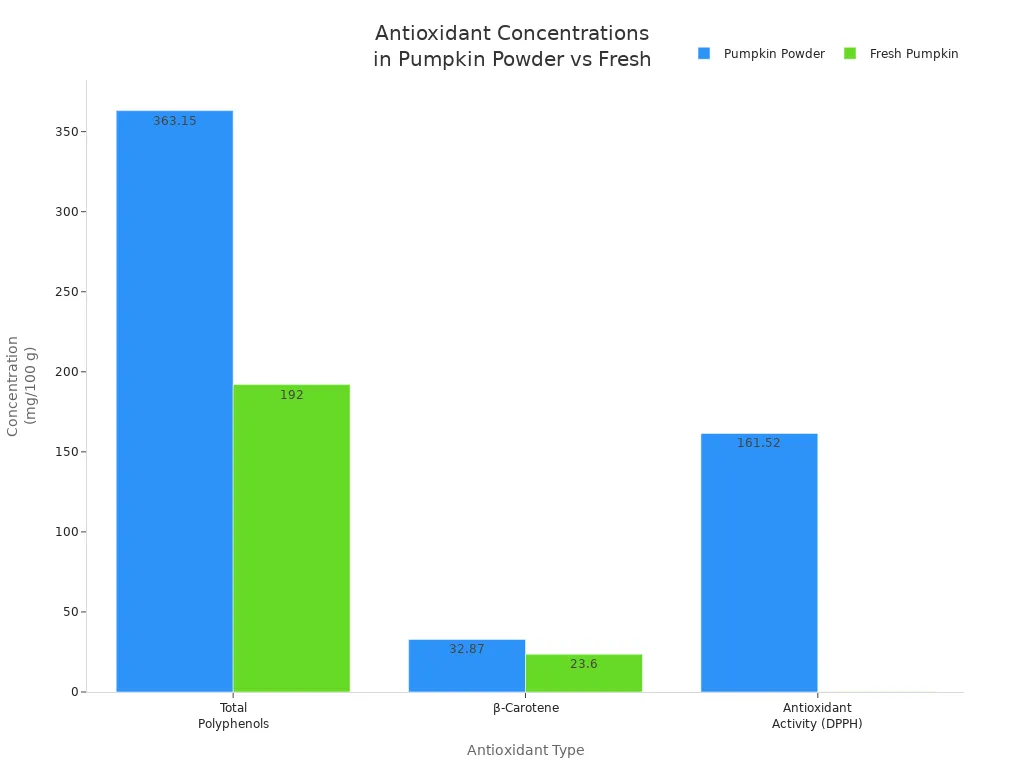
Pumpkin powder has more polyphenols, flavonoids, and carotenoids than fresh pumpkin. These antioxidants are stronger in the powder form. Drying pumpkin keeps these nutrients and can even make them stronger.
How pumpkin powder may reduce inflammation
Pumpkin powder helps lower inflammation because it has antioxidants, fiber, carotenoids, and minerals like magnesium. Carotenoids such as beta-carotene and lutein stop free radicals. Free radicals are bad molecules that hurt cells and cause inflammation. Antioxidants in pumpkin powder lower this stress and help the body control inflammation.
Fiber in pumpkin powder is also important. Fiber helps the gut stay healthy. A healthy gut helps the immune system and controls inflammation. If your gut is healthy, your body can better manage inflammation.
Magnesium and potassium in pumpkin powder also help lower inflammation. These minerals help cells work right and lower the risk of long-term inflammation.
The table below explains how pumpkin powder’s nutrients affect inflammation:
| Mechanism | Effect on Inflammation |
|---|---|
| Antioxidant properties of pumpkin polysaccharides | Reduces oxidative stress and inflammation, protecting organs from failure |
| Immunomodulatory activities of neutral polysaccharides | Modulates immune response, potentially reducing inflammation |
| Anti-inflammatory activity of pectic polysaccharides | Directly related to reducing inflammation in respiratory infections like COVID-19 |
Recent studies show pumpkin and pumpkin powder can lower inflammation in labs and in people. For example, pumpkin extract helped with contact dermatitis and lowered cell damage. Another study said pumpkin’s polyphenols help fight inflammation.
Pumpkin powder has more anti-inflammatory nutrients than other pumpkin forms. The powder keeps lots of helpful compounds. This makes it a good choice for people who want more antioxidants and to help their body fight inflammation.
Scientists use different tests to see how pumpkin powder lowers inflammation. They check enzyme activity and look at genes linked to inflammation. These tests show pumpkin powder helps lower inflammation markers.
Note: Pumpkin powder has antioxidants, fiber, and minerals that help fight inflammation. Its strong nutrients and easy absorption make it better than other pumpkin products.
Using pumpkin powder for health
How to add pumpkin powder to your diet
Pumpkin powder is simple to use in many foods. It is an easy way to get the good things from pumpkin seed protein. You can put pumpkin powder in baked goods, smoothies, and soups. Here are some ideas for using it:
- Put pumpkin powder in breads, muffins, pancakes, or cookies. This gives more taste and nutrition.
- Add a spoonful to smoothies, oatmeal, or energy bowls. This helps you get more nutrients.
- Mix pumpkin powder into soups and pasta sauces. It makes them taste better and feel thicker.
- Blend it into granola bars, roasted nuts, or veggie chips. This makes a healthy snack.
Organic Pumpkin Powder 16 ounce is organic, non-GMO, vegan, gluten-free, chemical-free, and kosher. The bag can be closed again to keep the powder fresh and easy to store. These things help keep the health benefits and quality of pumpkin seed protein. Keep pumpkin powder in a cool, dry place. This keeps its nutrients and anti-inflammatory power safe.
Safety and considerations
Pumpkin powder is safe for most people to eat. Some people may be allergic to pumpkin or other Cucurbitaceae fruits. Signs of allergy can be nausea, diarrhea, or itching. The high fiber in pumpkin seed protein can cause gas or bloating for some people. Pumpkin powder has antinutrients like oxalates. Eating too much may not be good for your health.
Studies say pumpkin powder is healthy, but more research is needed. We need to know if it fights inflammation better than pumpkin seed oil. Pumpkin seed protein helps the immune system and may help your heart. Always ask a doctor before making big changes to your diet.
Tip: Keep pumpkin powder in a closed container away from heat and sunlight. This helps it keep its health benefits.
Pumpkin powder has nutrients and antioxidants that help with inflammation. Research shows it can calm skin problems and help the immune system. Make sure to look for organic labels and lab tests before you buy.
| Evaluation Criteria | What to Look For | Red Flags |
|---|---|---|
| Product Quality | Organic, lab-tested | Vague labeling |
Talk to your doctor before you start new supplements.
FAQ
What are the main nutrients in pumpkin seeds?
Pumpkin seeds have protein, healthy fats, magnesium, zinc, and antioxidants. These nutrients help your heart and immune system. They might also lower inflammation.
How do pumpkin seeds help with inflammation?
Pumpkin seeds have antioxidants and magnesium. These help your body handle inflammation. Eating pumpkin seeds can help your joints and may lower swelling.
Can I add pumpkin seeds to any meal?
Yes, you can use pumpkin seeds in many foods. Sprinkle them on salads for crunch. Blend them into smoothies for more nutrients. Bake them into bread to make it healthier.Introduction